One of the biggest barriers to organic gardening success, and I mean that literally, is landscape fabric. Any kind of fabric or plastic that keeps weeds down will also keep fallen leaves or mulch from adding organic matter to your soil, leaving behind a hardened, dead zone where plants struggle to survive.
Now, that’s not to say landscape fabric is never the answer, because it can be very helpful in certain situations, but using it shouldn’t be the default, because it interrupts a number of natural cycles which would usually allow your plants to grow healthy and strong with less help from you.
What’s the tradeoff in using landscape fabric?
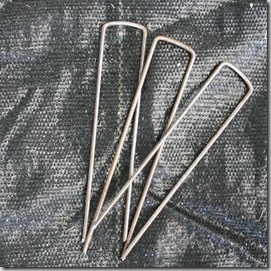
Aside from the impact on your soil, you ought to know that even professional-grade landscape fabric (I use Dewitt brand professional landscape fabric with their anchoring pins to hold it in place) only lasts ten years, and after that point, two things happen which make it stop working:
- The wood chips you have used as mulch and to hide the fabric have broken down to where you have a layer of soil on top of the landscape fabric for weeds to grow in.
- The fabric itself has degraded to where it’s letting weeds come up from below and take hold from above.
If you are going to use landscape fabric well, you’re essentially making the commitment to remove or replace the fabric in ten years. Otherwise the fabric will still be keeping your soil from thriving, while not actually working to keep the weeds down. It’s a time tradeoff – you have less weeding to do for ten years, then a big project to remove or replace the stuff.
So, when is landscape fabric a good idea?
If you have a brand new garden which is mostly made up of woody shrubs, ornamental grasses, heathers, and very tough perennials, and you’ve amended the soil well with plenty of organic matter, then landscape fabric can be a good choice for the first ten years. By the end of ten years, your shrubs and plants will be large enough to shade out most weeds, and you can remove the fabric (a bigger task than it sounds, as your plants will have rooted above and below it) and just add a fresh, thick layer of wood chip mulch to keep down weeds in future.
If you are planning on retiring in ten years and will have more time to care for your garden then, landscape fabric can help keep weeds down until you have more time to devote to your garden.
If you have dogs who like to dig, and you’re afraid they’ll dig up your freshly-planted garden, then landscape fabric will often deter them from digging. Once your plants have gotten large and established, you can remove the fabric since the occasional dig won’t uproot most mature plants.
Landscape fabric can help with erosion control on hillsides, until your groundcover or shrubs fill in and hold the soil on their own. I’ve seen people lay the fabric fuzzy side up (you usually lay it fuzzy side down) and then put shredded bark mulch on top to cover it – the fuzzy side of the fabric helps the mulch adhere and not slide down the hill. (I don’t recommend shredded bark mulch except on hillsides, where it’s the only mulch that stays put.)
The caveat with using landscape fabric is that it becomes even more important to keep up with removing any weeds that come up. If the weed gets large enough to root through the fabric, you’ve just shortened the length of time that your fabric is effective for you. A diamond hoe can help you kill weeds before they become a problem.
When NOT to use landscape fabric:
If you want to grow flowering perennials or plants that need a lot of nutrients, like roses or many edibles. Most plants that flower heavily through a long season need rich, composty soil to thrive, and if you have landscape fabric, your organic matter will be used up within a few years, leaving your perennials to lose vigor.
If you like an English Cottage-style garden with re-seeding flowers and plants that travel and intermingle. Weed barrier/ landscape fabric is going to keep spreading and re-seeding flowers from taking hold.
If you like to move things around and tuck in new plants fairly often. Not only is it a pain to dig up plants or plant new ones with landscape fabric, but if you change your mind and decide you want one large plant instead of three small ones, you then have extra holes to patch, and patched fabric isn’t very effective.
What’s the alternative?
If you can pull your weeds when they’re tiny for the first year, then after that point a good 3” thick layer of wood chip mulch is going to be every bit as effective as landscape fabric, while allowing your soil to enjoy the benefits of the mulch slowly breaking down and adding organic matter to your soil. The philosophy behind organic gardening is that we try to provide the conditions so our plants and soil can find a healthy balance, and need as little help from us as possible. If your plants are growing in soil that is constantly enriched by wood chip mulch or shredded leaves breaking down, it begins a natural cycle:
- The worms are attracted by the organic matter, and they aerate your soil and leave behind worm castings, which hold moisture. Less watering for you, and soil stays fluffy.
- The microorganisms in your soil will thrive, allowing them to break down the mineral matter in your soil into nutrients your plants can use.
- The organic matter breaking down also provides nutrients, so if you forget to add fertilizer one season, your plants will be fine.
- The mulch keeps soil from forming a water-repelling crust or becoming compacted by heavy rains or baking in the sun, so water’s easily absorbed and the soil both holds moisture and drains well.
I hope this gives you some info to consider when choosing whether landscape fabric is right for your garden. There are disadvantages to using it, but there are a number of situations where it is the right choice, and knowing exactly what you’re giving up when you use it can help you make the best decision for your garden.
Removing landscaping fabric? Here’s a tool that will help
I recently discovered the Bahco P20 Pruning Knife, and the curved blade and easy-to-grip handle has made it an indispensable tool in my crew’s weed-cloth-removal arsenal. I definitely recommend it if you are stuck removing weed cloth, or want to cut clean planting holes within it.
Further Reading:
Why I Hate Landscape Fabric: An Unfair and Unbalanced Look at Weed Cloth
Professional Tips on How to Use Landscape Fabric, should you choose to
38 responses to “Is Landscape Fabric/ Weed Barrier Right for You?”
I detest landscape fabric and never would have thought of all those good points of it if I hadn’t read this. But the bad is so bad. Most annoying is the fact that it always seems to pop out so you can see it!
I put down landscape fabric (cheap everyday stuff … mistake #1) a few years ago under the pea gravel in my circle garden. For the most part that should have been fine: organic material isn’t an issue on the paths and I obviously didn’t want anything seeding there.
But now, of course, dirt has gotten in there, so there oodles of weeds, and even reseeding plants (Jacob’s Ladder everywhere, someone remind me to cut the damn flowers off this year before they seed) growing in it. The landscape fabric is actually holding the dirt in now, creating a spot for seeds, mostly of the weed variety, to thrive.
I think it’s time to pull it out, but I sure wish I hadn’t done it in the first place. Do you recommend something else under paths made out of things like rocks? Of course it’s probably too late anyway. The pea gravel is there. I replace a little bit of it from time to time as it gets dragged off the path, but there’s no way I’d start from scratching on it.
Erin’s last blog post..A cool flower
I used landscape fabric only once, for a client who insisted. I didn’t like it, practically or environmentally. If I have a tough weedy area (oh I have many) I put down several layers of newspaper under the mulch. It helps somewhat and decomposes. I’ve found pine straw the most effective mulch for stopping weeds, though it isn’t readily available in my area. (My mom rakes up all her needles for me.) And it doesn’t acidify the soil as much as one reads, so non-acid-loving plants are fine with it.
Monica the Garden Faerie’s last blog post..Peonies!
I admit I have used landscape fabric in the past and stopped because, as you mentioned, the weeds just start to grow in between the mulch and the fabric. And once they do that they are so much more difficult to remove.
Just like Monica the Garden Faerie, I now put down layers of newspaper and then add mulch. I find 4 – 5 layers of regular newsprint, not the paper with colorful ads, works perfectly.
Debbie R’s last blog post..Welcome To My Test Garden
I have found nothing kills weeds. Not even blacktop or asphalt kills the weed. It only keeps it dormant till the blacktop or concrete breaks down. Weeds grow thru my fabric and 3 inches of wood chips do nothing in my Fishkill Ny home.
You said it all, and more. I also detest landscape fabric, and usually only use it as an extra layer under gravel or fines paths; never in flowerbeds. Mulch mulch mulch does everything that landscape fabric purports to do, and so much more!!! Glad to find your blog (at recommendation of Susan Morrison) and I’ll be back!
Laura Livengood Schaub (InterLeafer)’s last blog post..A Gardener’s Stack 1: The Grande Dames.
Excellent article! Thank you. I have one spot in the garden where landscape fabric worked well: under a pea-gravel path. It’s kept the gravel from mixing into the soil. Of course pea-gravel paths have their own serious drawbacks, but just like landscape fabric, there are places for them.
.-= hb´s last blog ..Photography As A Tool For Better Garden Design =-.
I just put in a pea gravel path with weed barrier. What are the drawbacks and do you have any suggestion for maintenance?
HB, you’re so right. Under pea gravel’s an excellent place for it!
[…] top of landscape fabric. Because I wasn’t worried about incorporating soil into the wood chips (landscape fabric has its uses), the Cobrahead worked really well at getting out the small, few-week-old weeds in the garden […]
Hmmm…. Too bad I didn’t see this earlier. My husband insisted on installing landscape fabric (it’s actually more of an industrial fabric – apparently good for 50 years I’m afraid) over the front flower beds at our home. The former owner had let everything go to weed to the point that even the perennials had become weeds. I saved a few plants and am trying a few new ones including some evergreens (these I’m sure won’t mind the tarp), but I’m afraid the tarp will bother my perennials. I guess I’ll be ripping the stuff out when my husband’s not around to see it!
Diane, you can mitigate the effects by making it a part of regular yearly maintenance to cut a little more fabric away from the base of perennials every year as they grow, so the perennials can benefit from the mulch breaking down and benefiting the soil. You do it a little at a time so the plant itself can shade out weeds. Do make sure you keep up with your weeding – no matter the year rating, if your weeds are allowed to grow big enough to break through the fabric, the fabric will have tiny holes all over and will become less effective.
Thank you for this article, as I was about to lay s ome more fabric down in a rather large garden under a large oak where I have planted some hostas (3 around tree), 2 rhododendrons (one on either side), and a river birch, with, in the middle of all of that, a beautiful little dark birdbath with (presently) 4 double deep pink impatiens surrounding the bath. I guess now I will rely on a heavy application of pine bark mulch with any pine needles I can gather from my large (fur) tree located elsewhere. This article and peoples’ responses are so helpful.
I used landscape fabric and love it. It’s under my bushes in the front of the house, it keeps the weeds out. Occasionally I get some crab grass growing up through it but most of the time it’s great. I over lapped areas around the bushes and I can easily pull back to add organic acid for my azaleas
We put landscape fabric down several years ago and now it’s just torn up and showing. Also, if you’re going to plant annuals, etc., you have to constantly rip new holes into the fabric to plant them and then you have torn holes/rips everywhere, weeds, of course, pop through, and you’ve defeated the purpose. No more.
Hi I live in New Mexico mesa (sagebrush) at about 8000 and am using the Dewitt Pro 5 oz stuff under a flagstone patio and under the paths. Due to bobcat damage to about 3000 sq feet around two sides of the house where they built the well and accessed the stucco (which had to replaced) I’m dealing with a lot of hard-pan clay. Not much grows in this distrusted trampled clay soI’m trying out a large area with the weed cloth and an inch or two of imported mushroom compost. Watering deeply to get the native grass/wildflower seeds to germinate. I’s been a couple weeks and it’s working. lots of little green popping up. I figured that later I could cut the big holes and plant trees for a natural shady area. I have good drainage and good water in terms of a well. The only weeds that want to grow in what we call caliche (hard-pan) are very nasty prickly weeds/tumble weeds so I’m hoping this is a rare application where the landscape will work. I normally despise the stuff but figure this application may be a good fit applying mulch in the middle of a mesa will encourage weed development very very fast. I’ve seen it happen: mulch + water = instant weed crop. I’ve only done about 1/6 of the job, as an experiment. What do you think? Thank you! I love your article..
I guess I should add that I don’t mind a few weeds and is the reason I’m covering the landscape cloth with native grass and wildflowers — I just want to give the good “weeds” a head start! ~robin
Hi Robin, You have unusual circumstances there and since I have never gardened in your climate, I really can’t say. My best advice is to google “garden coach” and see if you can find a local garden coach or consultant who can come to your home and advise you in person. I’m sorry I can’t be more helpful over the internet! 🙂
May I also say, kudos on wanting to garden with your local natives! Nice!
What about landscape cloth under a new lawn? My client currently has Bermuda grass, which is so hard to eradicate. My thought was to use gopher wire and landscape cloth under the new native sod we plan to install.
DeWitt landscape fabric is made of polypropylene, you know the stuff that plastic bottles are made from. We all work hard to reduce our plastic usage and to make sure it lands in the recycle bin. But what about spreading a thin, porous, layer of the stuff all over our soil, waiting for it to slowly disintegrate into our soil and end up in our waterways? I just took out some that has been in my yard for 11+ years and it was breaking down and I could see the small particles flying up in the air like tiny feathers (I wore a scarf over my nose and mouth). And when you do remove the old tattered stuff, guess what? It goes in the Landfill! Cannot recycle that dirty stuff! That got me thinking that this cannot be a good thing for our environment. Multiply that by how many millions of yards of this stuff is installed across this country and beyond and well, that’s scary. I’m contacting my states EPA to see what is being done about this. And I am going to stop using it and use paper and cardboard instead. I don’t care if they say “it’ll only last 1 year” we’ll see about that and I can keep layering with more mulch as people here have done. There has to be another way besides the DeWitt material. This invention was not a well thought out plan. But I’m sure somebody is making a whole lot o’ money!
Hello! We used newspaper under thick organic mulch three years ago and not one weed has poked through yet!! We do have Weeds in other areas which haven’t been addressed but when we pull the weeds up there are worms everywhere throughout the soil and clinging to the roots of the Bindis especially. It is hard yakka weeding but we’ve radically reduced the weeds by pulling them in winter when the soil is wet and soft. I find it very meditative.
Need feedback! I have taken out most of my frontyard greenery to make way for raised vegetable beds. The ground was covered with ivy, pacasandra and a variety of other assorted grasses and weeds. Im not into most of these landscape fabrics Im looking at. I want to put down a barrier over the dirt I already have (this is where Im asking advice as to what to use at this level) and then put the boxes on top of that and fill with sand, top soil and mushroom soil. Trying to keep this as organic a project as I can. Will layers of newspaper between the dirt and the box help keep those greens from growing eventually up through my soil? Peaches
Peaches, You can cover the area with something that will not let through light. This will kill off the vegetation. I like to use a thick layer of my fall leaves. The leaves smother the existing vegetation and feed the soil when they break down. The best part is they are free.
James
Thanks for your post. I have a question. I am installing a raised garden on our deck. I have already been told by someone who builds decks that ours is capable of handling a raised garden from a structural standpoint, but that I have to make sure that moisture doesn’t accumulate under the garden to avoid rotting the deck. I am thinking of putting down a layer of gravel on the deck and then putting a landscape cloth over the gravel before filling the garden with soil to avoid moisture accumulation on the deck under the garden. Do you have any other suggestions? Thanks.
Hi, I have a steep hillside and have spent 2 years battling ivy. I covered it with cardboard boxes and now it seems at least contained. before I plant I was going to mulch it with another layer of b-flute cardboard (per the instructions of the master gardeners in my county) but mulch slides right off that stuff. Then another local gardener recommended installing the plants in root barrier (eg. use a pot 3X as large as the plant with the bottom cut out) with some really healthy amended soil to protect the plants from the ivy roots that may creep in from the sides. How do I keep the soil healthy, the ivy at bay, and have something to cover the cardboard without using fabric?
[…] a post about how to use landscape fabric without screwing it up. Previously I’d written about when using landscape fabric is a good idea and when it’s not. Sometimes I try to be fair and balanced on an issue so I don’t sound like some kind of […]
[…] tips on using landscape fabric effectively here, here and […]
Hi, I was just looking for places to buy lots of landscape fabric when I came across your comments. I also read ‘why I hate landscape fabric.
I did use it in a 5×5 ft space in the middle of my garden years ago. It has road base gravel (my husband’s choice, I wanted pea gravel) on it and weeds/grass grow on it but they are easy to pull up. I am happy with it there. I have lots of happy plants around.
Now I am putting wood chips on permanent pathways. I’ll use up the fabric that I have, then will layer on the chips as you suggest, 3 to 4 inches deep. My sister had branches cut off her trees and they were chipped. She had the fellow leave the chips in the driveway and I am inheriting most of them, with just a bit of sweat. They are a bit rough, with sticks and leaves, but fine for a vegetable garden.
Cheers, Mary
Does anyone know if it’s okay to use weed barrier to PROTECT new grass seed JUST UNTIL IT BEGINS TO GROW? My thought is since it allows water, sun, and air through, it would be okay for a few days. I really appreciate all of this information. It’s great learning from the experience of others to avoid pitfalls. Thanks everyone.
Protect seeds from what? Birds? I believe there is a commercial netting meant for that purpose. Weed barrier does not allow sun through and would not work for that, I don’t think.
I found this site, right after I bought some landscaping fabric. Haven’t used it yet. I want to plant some Azaleas in front of a chain link fence (not my fence) and use the fabric to keep the weeds out from between the fence and azaleas, of course putting mulch on the fabric and around the plants. How would you suggest I handle this
I want to grow cantaloupe next year. I have read that landscape fabric will help warm the soil so seeds will grow quicker. Is there a better way to warm the soil than black landscape weed barrier?
I have developed and currently have a patent on a spray able version of weed barrier paper. The material once sprayed dries to the same non woven consistency of weed barrier. No need to cut around, stake or over lap paper. It can also be easily raked up and removed and reapplied. I am currently in the process of commercializing but am looking for additional direction in what environmental approval I need. Do you have and advise?
No, but please tell me once it is available for retail sale.
I don’t understand saying the fabric only last 10 years? I used fabric under my river rock 33 years ago and just removed it to redo my landscape and the fabric was still in good shape! Kept weeds at bay for better than 20 years until it got so much grass and dirt blown in to create enough soil to grow grass on top.
Thank you Genevieve for cutting through the fud on landscape fabric. I am no fan either of this type of barrier yet sometimes will serve the purpose if used under proper circumstances and doing seasonal cleanup. Nothing is ever completely maintenance free.
Thank you all for this excellent discussion on Landscape Fabric. I was about to put it down on the boulevard–around trees, bushes, ferns and hostas. You have all saved my soil and save me from a lot of questionable work!! I will just
clean out the weeds which are there now and then add 3 inches of mulch.
I plan to put down 4 inches of river rock (1 1/2″ size) in our park strip between the sidewalk and the road curb (dug down and removed the dirt). I’m thinking that landscape fabric underneath the rock will help with weed control. What do you think?