We’ve talked about why a thick layer of mulch, composty soil, and good watering habits are important if you want to garden more organically; it’s all about giving your plants a foundation of good health so that pest problems will be few and far between.
Today we’ll talk specifically about mulch: what it is, what type to use, how to apply it, and why mulching is the single most important thing you can do to improve the health of your plants and reduce maintenance time:
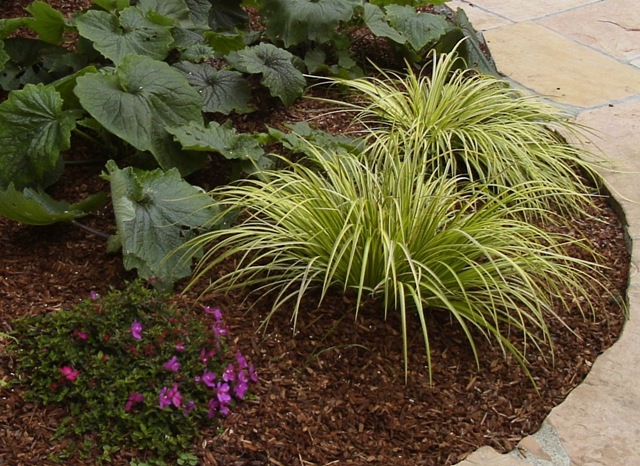
Mulching is when you add a layer of wood chips, chipped bark, shredded leaves, or other material to the top of your soil without mixing it in, so that it will hold down weeds, hold moisture in the soil, and contribute positively to your soil over time.
Why mulching is so over-the-top awesome for your garden:
- A 3” thick layer of mulch will reduce the weeds that come up by 75% or more overnight – it is the single best organic weed control out there. Clients who don’t have mulch are shocked at the difference after we put down a good layer of wood mulch – it smothers the weed seeds that try to sprout from the soil below.
- It helps your soil hold onto moisture so that you needn’t water so often.
- It also keeps your soil from getting so compacted when you step on it to maintain your garden, and keeps hard rains and hot sun from forming a crust on your soil’s surface.
- It keeps plants’ roots cool in summer and warm in winter.
- It helps support the beneficial micro-organisms and worm populations that keep your soil aerated and help change the existing nutrients in your soil into a form your plants can use.
- It can help keep some soil-borne bacterial diseases from harming delicate, over-bred plants like many roses.
- In some cases, mulch can help with erosion control.
For all these reasons, if you want a low-maintenance garden with happy, healthy plants, mulching is the number-one thing you can do to have an immediate, dramatic impact on the time you spend weeding, and the overall happiness of your plants.
Use mulch after you amend the soil, though, because otherwise you may hesitate to disturb your pretty layer of mulch by moving it aside to add compost underneath.
What to use as mulch?
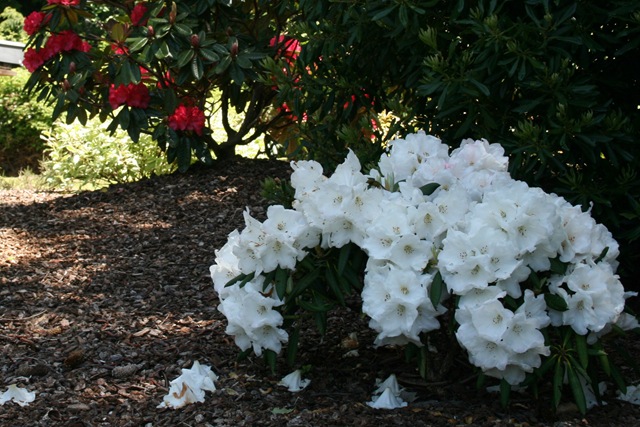
Wood chips, either an actual wood chip or a bark chip, help the most in keeping weed seeds from sprouting, and chips are easy to rake and keep neat. Smaller chips look prettiest and work best to reduce weeds and hold moisture in your soil, but the smaller chips do break down faster and need you to reapply every 2-3 years.
Bark chips usually comes in mini/ micro size, small, medium, and large. I use micro in most home gardens; small in gardens with really strong seacoast winds or rambunctious pets.
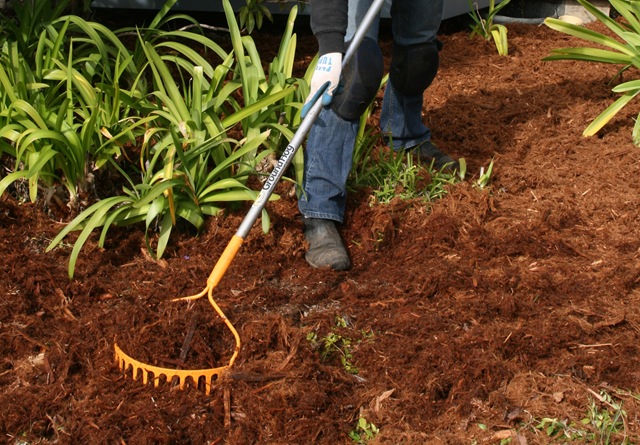
Shredded bark mulches are one of the few things that stay put on slopes. They are hard to weed in, unpleasant to apply, impossible to rake, and make your pants and gloves all splintery, but if you have a steep slope, it’s probably your best option – everything else will slide down the hill at the first rain.
Shredded Eucalyptus bark can slow weed growth because of Eucalyptus’s natural growth-inhibiting qualities, but it could also slow growth of your desirable plants, so only use Euc. in places where you aren’t growing much.
Some people use straw on their veggie beds, but it isn’t terrifically attractive and it tends to blow about, so I’d only use it where you won’t be looking at it. Straw is fantastic for softening a hard soil, though, so if you want to put a layer of straw down over the winter and then mix it into the bed in spring, that could be a good option. It’s also one of the cheapest mulches at about six bucks a bale. Rice straw is supposed to be weed-free.
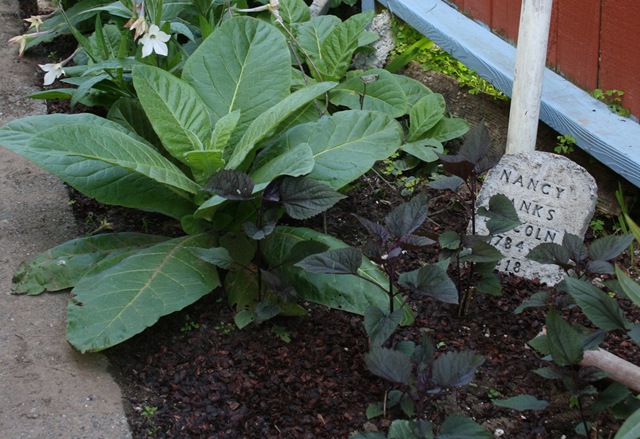
Cocoa hulls are from the cocoa bean and make an attractive mulch in the sunshine, and oh-my-gosh they smell divinely of chocolate, at least for the first few months. Two problems, though – they are poisonous to dogs who may munch them (I wouldn’t use it around cats or chickens either), and they mold in the shade. Pricy, too. EDIT Nov 09: We’ve got a scientific viewpoint on just how poisonous cocoa mulch is to dogs, and a tip that some brands may be pet-safe now. Read more here.
Fallen pine needles can make a great free mulch. I’ve found many perennials don’t appreciate the impenetrable coverage pine needles provide, but most shrubs and trees are fine with it. It will acidify your soil somewhat over time, so use it around blueberries and huckleberries, Rhododendrons, Azaleas, Pieris, and ferns, which are all acid-loving plants.
Shredded leaves can make a simple mulch, but the fluffy texture can harbor snails and slugs, so if I have leaves in the fall, I tend to just compost them and mix them into the soil once they’ve broken down.
Grass clippings and sawdust are other candidates for the compost pile, not for mulching. When they are in the process of breaking down, they use up nitrogen in the soil in their decomposition process (and lots of it), which means that your plants are temporarily going without the nutrient they need to put out green growth.
Using a layer of compost as mulch doesn’t reduce weeds, since any new weeds that blow in will find it a hospitable place to set new roots.
Some people “mulch” with rocks, gravel, or rubber mulch, but since they don’t enrich the soil and indeed should not be allowed to mix into the soil (you need to use these with landscape fabric underneath to keep them from getting mixed in), using inorganic materials to mulch is akin to using landscape fabric – not a great long-term solution for growing plants.
Many people have reported success with using newspapers (the non-glossy kind) or cardboard underneath their mulch for added weed control. The paper and cardboard break down slowly and provide an actual barrier to the weeds coming from below, while still allowing moisture to penetrate.
I have one adventurous client who tried this, and she ended up with newspaper bits scattered over her lawn and mixed into her pretty mulch after raccoons discovered that worms liked to hang out just under the newspaper. She later got a hungry mole tunneling under the paper, which made for more paper mache around the garden.
Take my advice and only try this in ornamental beds if you’re pretty laid-back about how your garden looks, or have no wildlife around who might like to tunnel under your paper for bugs. This is an awesome technique for vegetable beds during a dormant season, though. Cover it with a nice layer of straw, and mix the whole thing into the soil months later when you’re ready to plant.
How to mulch:
It’s simple – just smooth out your soil, and make sure the level of your soil at the edge of the planting bed is 3-4” below the level of your landscape edging/ bender board, concrete path, or whatever else your planting bed is next to. You want to make sure that when you put 3” of mulch on top of your soil, it doesn’t slide right off your bed into your pathways or lawn at the first sniff of rain.
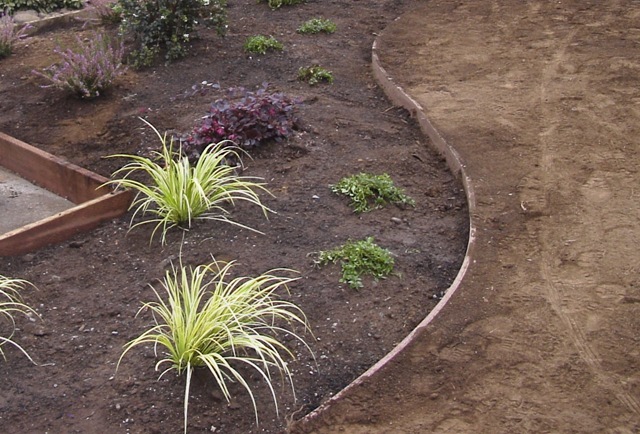
Then spread a 3” layer of mulch on your beds, spreading it thinner near the bases of your plants than everywhere else. A 1” layer of mulch against a tree trunk or shrub’s base is OK, but try to keep the mulch from completely covering the base of woody plants, particularly trees, as it can cause your plants to rot.
I use an iron bow rake or the ergonomically-designed Groundhog Rake to spread my mulch.
Once you’ve spread the mulch, water it in well to help it settle and keep it from sapping moisture from the soil – mulch often starts out rather dry, but once you’ve given it that initial drink, it will help conserve your soil’s moisture.
Tomorrow, we’ll talk about the final key to a healthy garden: how to water properly. Sounds simple, but it’s a big barrier to success for a lot of people, so we’ll go over the basics of how, how often, and what tools can help.
What’s worked for you? What kinds of mulch do you prefer in your garden? Let me know by leaving a comment below.
[print_link]
22 responses to “Gardening Basics: How to Apply Mulch”
I used straw as mulch in an 1860s garden I created for a historic property–omg it was WEEDY! I only did that once! Pine needles are my favorite mulch; they prevent weeds better than any other mulch I’ve tried. I do apply it around the bases of plants (not on top of a whole dormant bed) because it is hard (but not impossible) for plants to poke up through it. Finally, I can’t believe you didn’t cover the volcano method of mulching trees-HA!!!!!
Monica’s last blog post..Mish-Mash Monday
Ooooohhhh, the volcano method. My head hurts just thinking of it. For those not in the know, check out this page and scroll partway down. This is a mild example of what I see veeeery often. Don’t do this!
http://www.tlcfortrees.info/mulching_staking.htm
Fantastic and thorough. We bought a chipper as we have a lot of fallen wood, and spread that around our raised vegetable beds. I think we will need to add a lot more though, as the weeds and grass are starting to pop through. We have avoided putting fresh wood chip on borders though because it’s not as pretty as bark and we hear it’s not actually great for the soil. Do you have thoughts on that?
Here’s the chipped effort! http://themoderngardener.wordpress.com/2009/04/19/chipper-morning/
Linda Chalker-Scott, author of The Informed Gardener (a scientific approach to gardening), really recommends chipped wood very highly for mulching beds. It sounds like you just gathered wood that was already breaking down in the forest and chipped it, and that sounds fantastic to use on top of beds.
Only thing I’d pay attention to is if the wood was Eucalyptus or some other kind of wood that suppresses the growth of other plants, or if you just cut down living trees and chipped them – I might do some research as to how long to let it sit before using it as mulch – but all my research indicates chipped wood is fantastic mulch.
Thanks for the link to your blog! I love how you include so many photos.
[…] Learn some professional tricks to applying mulch in garden beds […]
[…] of compost and manure to help the sandy soil hold moisture and nutrients. Use a thick layer of wood chip mulch after planting to hold moisture […]
Thanks so much for doing this blog. I’ve been learning a lot. I was glad to see this discussion of mulch. I’m a Humboldt native, but I formed a lot of my gardening habits in Colorado. I applied an inch of two compost a couple of times a year and put down thick layers of chip/leaf mulch that the city provided for free. I was happy and my plants were happy. Now I’m back in Humboldt, and Steve Soloman’s vegetable gardening book informed me that thick mulch would breed hordes of slugs, snails, pillbugs and earwigs due to our mild winters, and could damage soil fertility until it breaks down. A local nursery employee cast aspersions on the bagged steer manure compost I had been used to using. Salt build-up! she said. So I quit doing both without a good idea of what to do instead. Now my garden has not been as lush as I would like. So, short story long, I am happy to see that perhaps I can keep doing that mulch/compost thing I used to do. (Now if only I can find a free source of awesome all-you-can-haul mulch…)
Amanda! Lovely to “meet” you! Your gardening habits sound perfect! Steer manure can be a bit salty, the nursery person was right – but with all the rains we get each winter, I think the salts wash through the soil before they really build up too bad. And steer isn’t as salty as chicken. I think you’d notice stunted, unhappy plants if it was a real issue.
Wes Green Landscape Supply in Arcata has some composted horse manure for $30/ yard if you know someone with a truck, or many stables are happy for you to haul off some fresh manure for free, though you may have to shovel it yourself. I have also heard rumors of free “zoo poo” at the Eureka Zoo, but have not personally gotten that since I have chickens and worry about disease if they have chickens. But I think it’s probably good stuff – chicken/ goat/ barnyard manure should be lovely. If you find any sources of good chip mulch for free let me know. Nobody around here seems to do that, though maybe some of the tree companies would oblige if asked.
Cheers to you and welcome back to Humboldt! Don’t be a stranger.
[…] Use mulch to preserve water (but leave a few patches of bare soil for the peaceful solitary bees that like to hide underground). […]
Hi Genevieve. Thanks for putting together this article, it is very useful for us, who are first time home owners.
Question: I have a small shaded area (about 150 sqft maybe?) under a few big trees in the back yard, and there are weeds all over the place there. I plan to mow the weeds, put in 3″ mulch and maybe put in a picnic table to make a small park-like area for our family. Any suggestion for me please? What kind of mulch will work the best? The county transfer station have free mulch, but I am not sure if they are suitable for this purpose?
Thanks,
Bo
Bo, the free mulch is great for this purpose! Unfortunately, mowing and then putting 3″ of mulch will not kill your weeds if they’re mature enough that you could mow them. Try mowing, then either use 6″ of mulch, or use a layer of cardboard (wet it thoroughly) with 4″ of mulch.
Or, you could kill the weeds by mowing, spraying with an organic spray or using a weed torch to kill the weeds (wait three weeks and retreat if need be), THEN put down 3″ of mulch. Hope that helps, Bo!
Hi Genevieve…..
Can I use fir chips for mulch in my flower beds?
thanks….dm
Yes! Unless your flowers are less than 6″ tall at mature height (like pansies), in which case I’d just use compost or composted manure as mulch.
Hi Genevieve,
I bought hardwood mulch, dyed black for my flower gardens. The mulch smelled so bad I couldn’t sit outdoors by it. The next day, the leaves on my plants started to turn yellow and die. Is there a chemical in the dye?
JoAnne, I wish I knew! I would certainly suspect so. We don’t have dyed mulch in my area so I am unfamiliar with it. The only other explanation is that it is a good idea to water after you apply mulch so that it doesn’t suck the water out of your soil. I would suspect the dye, but if the mulch is dry it could be a water related issue??
Help, please clarify regarding micro bark.
Does it come in different colors/tones?
I purchased 5 bags of “micro-bark”opened a bag & it looks reddish.
My neighbors micro bark is brown with a silvery cast to it & not nearly as red.
Does the color change over time, or is there a truer brown color available?
I purchased from the same nursery as my neighbors too.
Thanks you!
The color changes over time to become more silvery! 🙂
[…] Read more… […]
[…] you have wood chip mulch or landscape fabric in place to prevent weeds, the leaves will break down on top of the mulch or […]
Hi Genevieve,
I am a total newbie at gardening. I’ve moved into a house with a concrete patio with a large overgrown border (10 years worth of weeds, deep-rooted blackberry bushes and lillies). In live in San Francisco near the beach, so it’s pretty sandy and dry. I’ve weeded with a string weeder and pulled up as many roots as possible. But I’ve gotten conflicting advice for next steps.
I’d like to plant some decorative grasses, lavender, hydrangeas, and other drought-resistant things. Should I mulch and then plant? Or plant and then mulch? If it’s the first option, how long should I wait before planting. Others have recommended landscaping fabric, but you’ve put me off that idea! Lastly, I was told that I could mulch and plant in containers, but I think that sounds really pricey and I’d like to do this as cheaply as possible. Thanks for your advice!
Caroline
Hi Caroline, I usually remove ALL of the plant roots possible (string trimming doesn’t cut it I am afraid to say – water, wait two weeks, and pull those weeds OUT!), plant the entire garden at once, and then mulch. You can move the mulch aside to fill in with more plants later, but dirt tends to get incorporated into the mulch which makes it less effective at weed control. Hope that helps.
Hello. Thanks for all of the tips. I’m a newbie gardener living in the San Francisco Bay Area (close to the bay but not the ocean) and am looking to plant veggies and fruits. It’s important to me that the garden is organic, but we recently had our house fumigated so we are building raised beds (2 x 8 foot beds that are 12 inches high). I’m planning to follow your advice on soil/compost/mulching although I have a few questions about the composition of the 12 inch bed:
1) To form the base of the planter bed I’ve seen suggestions to lay cloth or plastic. I prefer not to use plastic (to avoid the chemicals). Would I mulch there as an alternative?
2) Once I lay the foundation, would I first soil and then finish off with soil/compost mixture and then a final layer of 3 inches of mulch to keep weeds away?
3) Do I plant the veggies and fruits before the mulching and just mulch around the plants?
4) Any particular types of soil that I should use?
Thanks so much!
2) For a 12 inch bed, would I lay 4 inches of soil, and then on top of that .